Episode Transcript
[00:00:03] Speaker A: Welcome to Chicago Musician.
Last time I didn't really do an intro. That was very good.
This sounds a little more covered than I'm used to. How can I.
What do I do with this eq?
I'm not sure.
Let me try a different channel.
Does this sound the same? It seems. Does it sound the same?
I still seem a little.
I don't know.
I. I guess I'm out of practice.
Wow, what a waste of an intro.
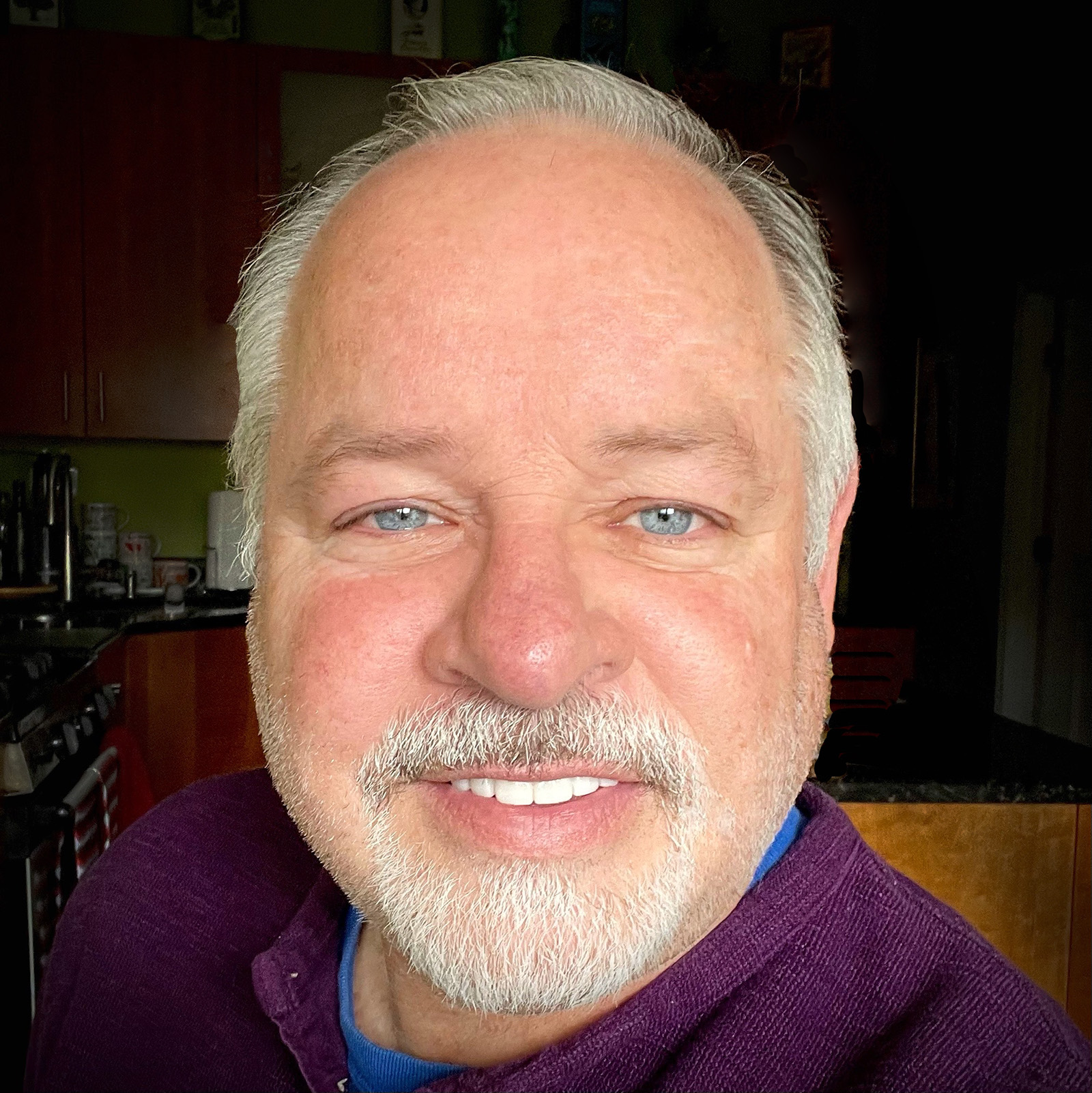
Anyhow, my guest for this episode of Chicago Musician is a Chicago musician, but also an international musician and a national musician.
He's originally from Milan, Italy.
He lives most of the year in Tucson, but spends his summers in Chicago.
He is currently entering, I think, his seventh year as the principal clarinet in the Grant Park Symphony Orchestra that plays all summer long down in Millennium park at Pritzkirk Pavilion.
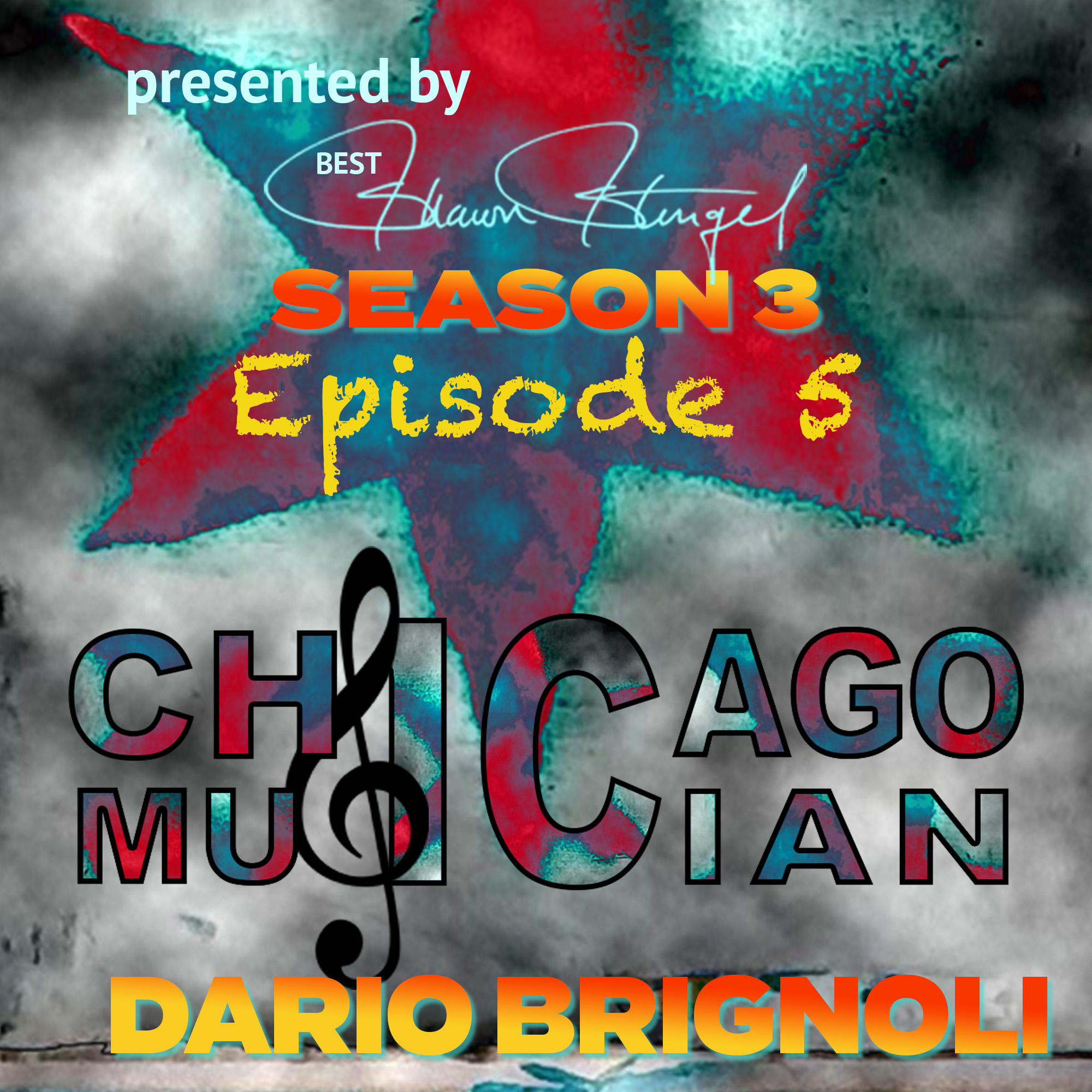
So, yeah, let's talk to Chicago musician Dario Brignoli.
Welcome, Dario.
[00:01:33] Speaker B: Thank you.
[00:01:34] Speaker A: I'm glad you're here on Chicago Musician, because do you. You must feel like a Chicago musician by now.
What is this, your sixth?
Did we agree it's your seventh?
[00:01:48] Speaker B: Oh, yeah.
[00:01:50] Speaker A: You're starting your seventh year of Grant Park Symphony.
[00:01:53] Speaker B: Yeah, it's always weird with. With COVID in the middle, but I got the job seven years ago, so I think we can say seven years.
[00:02:00] Speaker A: Okay.
And you're here every summer for what, 10 weeks?
[00:02:03] Speaker B: 11 weeks every summer. 10 weeks would be nice to come a little bit earlier and be a little bit better prepared with this ridiculous amount of concerts, but, yeah, I come here in Chicago. I play in Grand Park Music Festival, and it's been a blast so far.
[00:02:22] Speaker A: What do you. What do you play?
[00:02:25] Speaker B: Well, I played the clarinet, but I guess you were asking more, what music do we play?
[00:02:30] Speaker A: No, I was making a joke, because I know the answers. I know all the answers. Oh, right. That's why I'm the host. Principal clarinet.
[00:02:38] Speaker B: That is correct.
[00:02:39] Speaker A: So my observations of you over the last few years, because, full disclosure, I. I know Dario pretty well now after several years.
It's a lot of material.
I mean, you do two different concerts each week of the summer?
[00:02:58] Speaker B: Yes, two concert.
Two programs. Two.
[00:03:03] Speaker A: Sorry, yeah.
[00:03:03] Speaker B: Yes, two programs. Three concerts every week for ten weeks.
A lot of classical music, for sure. But we also play a Broadway night in past years. We also used to have a movie night.
We do have some pop this year. And we have a songwriter of which I don't remember the name.
[00:03:29] Speaker A: Yeah. And aren't you. Don't you usually do a special Fourth of July concert?
[00:03:33] Speaker B: Oh, yes, absolutely.
[00:03:35] Speaker A: And Isn't it more special this year?
[00:03:38] Speaker B: It is. For the 250th anniversary, I'm gonna play solo.
[00:03:43] Speaker A: Yeah. Because of course, in America, for the 250th anniversary, we want an Italian national to play a solo, so that's what they've booked.
Fantastic. Well, we're international, or we used to be. What are you playing?
[00:03:59] Speaker B: Trip Preludes by Gershwin, originally for piano, arranged for clarinet and orchestra. Should be fun.
[00:04:05] Speaker A: Nice.
And then that's usually more like.
Isn't that your guest conductor?
What's his name?
[00:04:13] Speaker B: Christopher Bell is actually the choir conductor.
[00:04:17] Speaker A: Okay. Yeah. But every year he conducts the holiday concert, right?
[00:04:21] Speaker B: Yes.
[00:04:21] Speaker A: So it's usually patriotic stuff, and that's sort of the material, right?
[00:04:27] Speaker B: Yes. And he's very much a showman, so he put on ridiculously fun outfits.
[00:04:35] Speaker A: And usually red, white, and blue. Yeah. Often sparkly, you know, But I wouldn't. I wouldn't wager on him out dressing you. So we'll see how that goes. So here you are in Chicago. How do you like it?
[00:04:51] Speaker B: I love it. It's a great town. There's a lot of amazing food.
The scenery with a skyscraper is just incredible. Having the lake and the beach so close to work is great.
[00:05:03] Speaker A: Is there anything about it that surprises you or surprised you? Initially,
[00:05:10] Speaker B: yeah.
The way the people are is very different from the cities I've been living in or visited. Because before, a little bit less in your face than New York and Boston, but seeing still quite direct people, but at the same time, warm and nice, a little bit less plastic and fake. That was my impression when I was living in Los Angeles. And Tucson is a very different culture than here, so.
[00:05:45] Speaker A: So why Tucson?
[00:05:47] Speaker B: Because that's where I spent my winter, playing in the Tucson Symphony.
[00:05:52] Speaker A: Oh, Segue, Sean. Thank you, Kaching.
And how many years have you played there?
[00:05:58] Speaker B: Nine years that got the job in 2017.
[00:06:01] Speaker A: Okay, so that's your.
Is that eight months a year job? Nine months a year? Yeah.
[00:06:08] Speaker B: Eight months, I think, is correct.
[00:06:09] Speaker A: Okay, so Tucson's really your home now, and Chicago's like your snowbird in reverse job. I guess.
Sort of.
[00:06:22] Speaker B: It's weird. I really feel my time in Tucson is my downtime, in which I only play one program a week. And I do have a lot of students, but I feel my life is a lot more relaxed than my time here in Chicago, where It's just music 24 hours a day for 10 weeks.
[00:06:43] Speaker A: Yeah. Pretty intense. You don't have a lot of tourist time?
[00:06:46] Speaker B: No, unfortunately.
[00:06:48] Speaker A: Yeah. So, I mean, he's. He hasn't even seen the bean, folks, I'm pretty sure.
Or not the real one. I showed him a picture, so I think that counts. Oh, wait, you play right by the bean. Yeah. I should have picked a better example, like the Sears Tower.
[00:07:04] Speaker B: Yeah, that's the only thing that I see every day.
[00:07:07] Speaker A: That's true. So what's it like playing at Millennium park and the Pritzker And I love it.
[00:07:14] Speaker B: It's just incredible, the view. And the fact I have to say that playing outdoors is. It's really a big change. Obviously, we used to play indoor in theaters or in just a practice room where we practice all the time. And getting ready to go to the big university, to the big job, and being outdoor all the time. And especially the amazing feeling is having people coming because all our rehearsals are open.
So having people there clapping for us, even between movements, even when we have to stop because something didn't go right. But people are very enthusiastic about hearing music for free in the park.
[00:07:56] Speaker A: And I don't think most people are aware that during the day that they could wander down into Millennium park and there's a full symphony playing.
[00:08:08] Speaker B: That's right.
[00:08:09] Speaker A: So that's what it is. Kind of like you have like a captive, delighted crowd. Like, look at this bonanza we've found.
[00:08:15] Speaker B: Right. And we do have a little stand with people of our organization explaining who we are, what we are doing, because obviously the majority of tourists will come and say, oh, is this the Chicago Symphony?
[00:08:27] Speaker A: Right.
[00:08:28] Speaker B: And we have to say, no, unfortunately, we are the other orchestra.
[00:08:31] Speaker A: They flee to the suburbs.
We dare play in the city.
Right? Yeah. Well, that's cool. So let's back up then.
How the hell did you get here? How did. Let's see, how did you.
Okay, let's really go back.
You're from Milan or near Milan, Italy?
[00:08:50] Speaker B: Yes.
[00:08:51] Speaker A: Lead us, Lead us there. Take us back.
[00:08:57] Speaker B: Born in 1987, Dario grew up in a little town called Cornarido. And then he basically always went to Milan every day to study in the Conservatory of Music since the age of 11. And then I lived in Milan until the age of 27.
I founded an association in my little hometown of Corn. And I was mostly organizing concerts, explaining what is classical music, what are the bias towards contemporary classical music.
And I found myself being a manager. And I really wanted to be a musician. So I moved to Copenhagen, where I could study for free, because all university in Denmark are free for all Europeans.
And I got my degree. I tried to get a job in the Scandinavia region. I was not lucky enough I guess. Or good enough.
So I went to study with the clarinet teacher that helps people. People get a job. And this clarinet teacher was teaching in Los Angeles, in Colborne and usc. His name is Yehuda Gilad. I got a Fulbright scholarship, I landed in la, and six months later I got the job in Tucson.
[00:10:11] Speaker A: How does one score a full scholarship to usc?
[00:10:15] Speaker B: Being a great Saleman, I guess that's how you say it.
[00:10:20] Speaker A: You have to write like an application or do you audition?
[00:10:24] Speaker B: Very long application.
A very intense screening in which I had to bring all sorts of prices. My previous experience in the youth orchestra, I played with, with Muthi Mutin, a youth orchestra called Cherubini for several years in Italy.
[00:10:43] Speaker A: Ricardo Mutti.
[00:10:44] Speaker B: Oh yes, the.
[00:10:45] Speaker A: The conductor emeritus forever of the Chicago Symphony Orchestra.
[00:10:49] Speaker B: That is correct.
[00:10:51] Speaker A: That's kind of cool. Take us there a little bit. Okay, so I have more questions. Yes.
So you've been studying since you're 8, 12, something like that? 11. Yeah. Why are there. Is there music in your family?
[00:11:02] Speaker B: Yes, definitely music in my family. My grandfather played the clarinet and the saxophone. The stories that he avoided going to war because he was able to play also the clarinet. But he was mostly a saxophone player
[00:11:18] Speaker A: because normally for saxophone they send him to the front lines. Right.
It's just they're right behind the bagpipes, from what I understand.
Right. Or maybe the banjo players, I'm not sure.
Anyhow, never mind me, go on with your lovely story.
[00:11:34] Speaker B: Military band. You would have a very few saxophone player, but a lot of clarinet players. So that's how we avoided going to battle.
My uncle is trombone graduate from School of Music, teacher of middle school of Music.
I have another uncle, very talented guitar player. He solo with the Radio Symphony Orchestra in Italy.
And my father, I think he really wanted to be a musician himself, but I don't know, he didn't have the patience or whatever, the lack of something happening in his life. So he really encouraged me to become a musician. He helped me through the beginning years when you need a little bit of consistency. And he took me to participate in a. A lot of competitions. My. My first, I would say 10, 12 years of music making was really just practicing the clarinet to perform to prove I was better than others. And luckily this contests. Yeah, yeah, competition for. For prices, often very little money and a lot of preparation for 100 bucks. But when you are 15 years old, it seems like a lot of money.
[00:12:51] Speaker A: Yeah.
And so at what age are you in an orchestra that Muti is conducting?
[00:12:57] Speaker B: That was when I was 22, was the first time I was really lucky. I think one of the judges for the selection to enter this orchestra really liked me. And he actually gave me a lesson to step into the following round in the final in front of Muti, because he said, if you play like this, you're not gonna go anywhere.
But eventually this youth orchestra works that they make a list. The first one get to call to play. But if they refuse to play, then they go down the list. So eventually I was the sixth or seventh and I was called to play. And guess what?
I had to choose the concert with Muti instead of the wedding of my sister.
[00:13:48] Speaker A: Okay.
[00:13:48] Speaker B: And. But by choosing, going to playing with that orchestra, I performed with Muti for four years and I played in. In Paris in the Theatre de Champs Elysees where they premier rite of Spring. I played in the theater Colon in Buenos Aires. I put. I played in Bahain, in Oman, in Rome, in our own parliament. So in Salzburg, a lot of amazing.
[00:14:14] Speaker A: Seems like it worked out. Oh yeah, sorry, sis. Right. She'll have another wedding, right?
Oh, never mind.
[00:14:21] Speaker B: She might.
[00:14:24] Speaker A: So that's a. I mean, Ricardo Mutti is the top of the, the cream of the crop. So that's pretty great young person training, right? Was it nerve wracking? Was he fun? Was he. How was that?
[00:14:37] Speaker B: I have such a fond memory of that time because we were all scared, obviously. We, we just story few years prior that he had this huge fight with the players of La Scala and he, he left La Scala very upset and he was this terrifying, tyrannic conductor. But with us it was really just our old grandpa. And whenever he would notice that we wouldn't get a little bit scared and tentative in our playing, he would just stop and tell us a story.
And so I have so many stories of Muti telling us this and that. What happened in Philadelphia in 1968, when it wasn't the first time that he conducted there or what happened the first time he conducted in Vienna or in the same time he just got the job here in Chicago. So he was also telling us how was the orchestra in Chicago and how was his own feeling. So we had a great insight of his, his life.
[00:15:41] Speaker A: That's stuff a lot of people, you know, even in his interviews, that's not what they're asking him about or he's telling people about. So that's. That's pretty rarefied insider gossip, I guess.
[00:15:54] Speaker B: Oh yeah, he. He said some very dubious jokes for us for sure. But he didn't care because we were just his kids. And really I saw him two years ago when he was conducting a concert of Chicago Symphony on the stage of the Grand Park Music Festival.
And he. He was just so happy to see me and was like in. He had a big entourage of people in his room and he was saying, see my kids go around and win jobs around the world.
[00:16:26] Speaker A: Oh, that's cool. That's very fun.
So. So then that's three or four years playing there.
What's the Scandinavia rejects? You soundly says no, you're not cold enough for us. Right. How so how were you hot enough for Tucson? Just you decided to try the United States.
[00:16:51] Speaker B: It's very tricky to get a job in an orchestra.
The judges are the musicians. So obviously every audition is very different. And we don't really have anything objective about how is your way of playing, is it good enough or not? We don't know until the day in which you actually presenting yourself. And I.
I notice more than a subjective decision making. I was not confident enough of what it was proposing as a musician. That's really all what is about.
If you are very sure of what you're presenting and obviously there are some objective criteria. You need to be in tempo, you need to be in tune, you need to play the right notes. But a lot of other interpretative parts, the dynamics, how much of relentando all of those are connected to your Persona and what you are presenting. I think I was just not mature enough to win a job in Scandinavia at that time. Yes.
[00:18:03] Speaker A: So then is it hard to get even get an audition in the US if you're not from here? And who did you pay off? That's what I want to know.
[00:18:13] Speaker B: Well, one of the biggest problem is that when you come to take an audition in the United States, you need an invitation letter from the orchestra because you're not coming here as a tourist. You're actually applying for a job.
So at the border you have to say you're going to take an audition. And if an orchestra is big enough to help you with the immigrant immigration papers like Chicago Symphony, New York Philharmonic, they will definitely give you a paper that says you are here for this reason and that should not be a problem. But Tucson Symphony does not have the financial means to help with the visa. So the only way you can go to take the audition is to be already here. And I was here already because I had a student visa.
[00:19:09] Speaker A: Oh right, you were at usc.
[00:19:10] Speaker B: That is correct.
[00:19:11] Speaker A: Okay, so then you get.
You score the victory in Tucson. That must feel good.
[00:19:17] Speaker B: Oh yeah.
[00:19:18] Speaker A: I mean there's. There's not that many jobs. And for every job, there's a zillion people who play. Like you said, you know, this behind a curtain, luck of the draw. You play well. It's cold. You squeak. You don't.
The cello player on the panel doesn't like that you played too loud.
From my understanding, I haven't auditioned for an orchestra. But you don't get any feedback either, do you? Do they tell you like you played too loud, you played too slow?
[00:19:52] Speaker B: They do. You can ask for feedbacks, and some member of the jury will send you feedbacks. I had very useful feedbacks. For example, when I auditioned for the Method, I just recently took an audition for the Phoenix Symphony, and the only feedbacks I got were two members saying, you played great. I voted for you. I don't understand why you didn't make it to the final. So that's also.
[00:20:17] Speaker A: So is that encouraging or not?
Mixed bag, right? Yeah. Okay. But. So that's a.
How long were you at USC? A couple years?
[00:20:30] Speaker B: No, no, six months. I arrived August 2016 and I got the job. Well, I guess more than six months.
I got the job in April 2017.
[00:20:40] Speaker A: So obviously you came here to study, but it must be kind of weird that 10 years later you're still here, right?
[00:20:48] Speaker B: Yeah, it. It's a sensitive topic. The only way for me to remain in the United States is through a special visa because the own called the O1 visa for special Talent. I'm doing air quotes here.
So this allowed me to play the clarinet teacher. The clarinet. But I cannot do any other job and I cannot vote. So it's a little bit limiting, for sure. Even though I'm very happy with the job I have. And.
[00:21:18] Speaker A: But yeah, I've heard that if you just go to California, you can vote.
[00:21:24] Speaker B: I heard that too, but I don't believe it.
[00:21:25] Speaker A: Every time I watch Newsmax, that's what they tell me. Which the times I've watched Newsmax is zero. Anyhow, we move on.
[00:21:32] Speaker B: Okay.
[00:21:33] Speaker A: Okay. So that's cool.
So I want to know a little bit more about, like, growing up in Milan or near Milan. How far from Milan? It must have been close if you're commuting.
[00:21:46] Speaker B: Yeah. A lot of people commute to Milan, even if they are far away. But I'm very close to the center of Milan. I think is less than six miles to the Duomo. So it's very close.
[00:21:58] Speaker A: Okay.
[00:21:58] Speaker B: But my little town was amazing to grow up because very little traffic, a big park in the middle of.
Of the city and town village. Even if you want is still 20000 people. It's not really small, but it's one of those places where people just go to sleep and then woke up in the morning. They go to work, to Milan, they go out to Milan. There is not much of a life or a nightlife.
[00:22:26] Speaker A: Well, here we would call it like a be.
[00:22:29] Speaker B: Exactly.
[00:22:29] Speaker A: So.
So we know you have a sister. Any other siblings?
[00:22:34] Speaker B: No, that's it. One sister with three daughters. So I have three nieces that are growing very fast. They. They all went to a bilingual school and so obviously they learned British English and they make fun of me terribly for my half American, half Italian accent.
[00:22:52] Speaker A: Well, isn't that what nieces are for though? To mock their uncles?
[00:22:56] Speaker B: I guess so.
[00:22:56] Speaker A: That's what I found in my vast experience.
All right, so.
And you can nix me on this or not, but your mother died when you were fairly young, right?
[00:23:10] Speaker B: Yeah, I was 17.
[00:23:12] Speaker A: Oh
[00:23:15] Speaker B: yeah. It's been, it's been interesting to. To look back Now. It's been 20, almost 22 years and obviously it's been a great loss.
But she was an extremely strong person and very compassionate to other people.
And I still, I still feel that she's. She's with me in a lot of situation. I'm. She was able to. To talk with whoever people and she was very much a feminist. So I feel she, she taught me well in many.
[00:23:56] Speaker A: Didn't you tell me? And your father was an anarchist, right?
[00:23:59] Speaker B: Yes, well, for sure he was. When they met later on he became a communist and then a little bit more on the left leaning side and then very much of liberal in the last years, which created a lot of discussion in our family. My father has three brother and a sister and a lot of very, very loud political fights and a lot of
[00:24:24] Speaker A: hand gestures I would imagine. So unfortunately he died. That's like a year ago now, right?
[00:24:30] Speaker B: Yes, my father died the 19th of May 25th.
[00:24:36] Speaker A: Okay, so that's fresh.
[00:24:37] Speaker B: Yeah, yeah, it's very. It was very sudden.
Our relationship has never been amazing, but I'm happy that at least in the, the. The months before his passing, we were having very nice conversation.
He retired a few years ago and he was spending a lot of his time traveling the world and telling me and stories and showing me pictures of Madagascar and Brazil and Australia and wherever other places went.
[00:25:09] Speaker A: Lincoln Square, Chicago.
[00:25:10] Speaker B: Oh yeah.
[00:25:11] Speaker A: I was lucky enough to meet him and one of your nieces.
Yeah, they were here for dinner and this is a funny story, people. It's funny to me. So I get to tell that I'm the host. But they came for dinner, and Dario made, like, a nice pasta, and we had a nice full dinner, but the niece had heard about pancakes, and I'd heard, you know, she wants. She wants to have pancakes. So we ate the nice dinner, and then I'm like, well, Consuela. What was her name?
[00:25:42] Speaker B: Emma.
[00:25:43] Speaker A: Emma. That's so. Yeah. Good job, Sean.
You still want to have pancakes? Oh, yeah. Well, everyone wanted pancakes, like his dad wanted pancakes. I'm like, oh, I see. Pancakes is the real deal here. So I whipped up a whole big batch of pancakes. In addition to, like, piles of pasta, we ate pancakes.
It was pretty fun.
And she was. She was cute. She was a nice girl and spoke some English, so it was kind of better than, you know. Who was. Who's your dad?
[00:26:15] Speaker B: Her and my uncle.
[00:26:18] Speaker A: Uncle?
[00:26:18] Speaker B: Yeah, my uncle Alessandro. He really.
[00:26:21] Speaker A: The trombone player.
[00:26:22] Speaker B: Yes.
[00:26:22] Speaker A: Okay. Yeah, that I remembered.
[00:26:24] Speaker B: So he really does not speak a single word.
It doesn't even try sometimes. But, you know, for us, whenever you. You make something sweet for us is a dessert. So pancake is a dessert.
[00:26:38] Speaker A: Yeah. And for me, that's the main course, you know. But c.
I'm Scandinavian, and remember, we've rejected you soundly.
[00:26:46] Speaker B: And that's why you put pineapple on pizza.
[00:26:49] Speaker A: I do not do that.
[00:26:51] Speaker B: Thank God.
[00:26:52] Speaker A: I don't understand that. But, yeah, well, you're. You're the pizza people, so. Well, that. Okay, so family worlds.
You still go back to Milan, like, at least a couple times a year. Well, now that travel sort of sucks. That's maybe different, right?
[00:27:09] Speaker B: Yeah, I went this year already three times.
I played some concert there.
I.
I go visit my family, I go visit my friends.
I would like to have a little bit more work to do musically in Italy, but it's hard to keep.
[00:27:34] Speaker A: Yeah, it's a tough nut to crack, you know, if you're not in the market, you're not available for most gigs that might come your way.
[00:27:43] Speaker B: Yeah, there's that part. And you know that if you're just a substitute and a freelancer and you have to move from this and that gig, you can't really live 6,000 miles away.
[00:27:56] Speaker A: It's. It is inconvenient at the very least, so. Okay, well, I think that's. We've got your background, and we're going to take a little break here for what I call the interval. Okay. It'll be thrilling, believe me. And then we'll come back and we'll chat some more about, you know, now.
Now what do you, you know, what do you do? What do you do for fun? That sort of stuff.
All right.
[00:28:22] Speaker B: Okay.
[00:28:23] Speaker A: We'll be back with Dario Brignoli.
Very good.
Today's interval, the perfect octave.
Surprising, yet disarming, is brought to you by no one.
Still no sponsors.
I guess if you don't seek sponsors, you usually don't have any. So that's where we're at.
Nicely done, Dario.
And let's get back to our conversation and learn a bit more about this fellow from jolly old Italy.
That was our interval.
[00:29:42] Speaker B: Ta da.
[00:29:43] Speaker A: I don't know what it is yet, so I'll have to, you know, post dates in post production. I'll add my comments or something.
Anyhow, we're back with Dario and, you know, we sort of covered his career as it is. You're right in the middle of it now.
Do you.
I mean, you're right. I mean, you're a working professional. You got two pretty big, high profile gigs.
[00:30:08] Speaker B: Yes.
[00:30:09] Speaker A: Plus a few on the side. And I mean, that's exciting since, you know, I. Last year I had my annual day of work and it was. I mean, it was exciting. But oddly, in your venue at the Pritzker Pavilion, I play one concert a year, the Broadway in Chicago concert.
But my question was first, what of.
In your world, in the classical world, what's your favorite, like, composers, or what are the pieces that, like, you look forward to, or the ones you fear, the ones you dread? Do you think of it like that or do you try to stay neutral because you're not in charge of, you know.
[00:30:56] Speaker B: Right. I do have a prepackaged response for this, which is my favorite composer is the composer I'm playing this week.
[00:31:07] Speaker A: Yeah. That's so tired. But thanks.
[00:31:10] Speaker B: It is. It is the way I am.
[00:31:12] Speaker A: But is that truly an approach you have?
[00:31:14] Speaker B: Yeah, absolutely.
[00:31:15] Speaker A: Okay.
[00:31:16] Speaker B: Because I.
I have to say I really enjoy the music because I try to enjoy the music.
Like, not every piece of music is amazing, but if you look carefully, you can find something to enjoy. And it's also very important for me.
[00:31:36] Speaker A: I'm sorry, but is that also true for Philip Glass?
Yeah, sure. Personal bias.
[00:31:44] Speaker B: I'm not a big fan of Philip Glass either. We'll have to play one of his piece. I think it's gonna be week nine and I'm already terrified by the fact that it seems like the same thing for four pages and is technically challenging.
It's very repetitive.
[00:32:00] Speaker A: I wonder how you count it. I don't know.
Anyhow, we digress.
But so that said, even with a good attitude, are There composers that come up and you're like, ah, shit, this is.
I'm subbing out.
[00:32:20] Speaker B: I mean, I really look for what are the best things about the piece I'm playing. And there is. Even though maybe it's not there are no great harmonies or there is no great music. Maybe I can be pleasant, I can enjoy the amazing sound of my colleagues. And look, this guy is playing this one single note and he's playing this note beautifully. Or look how we are playing very well together. Oh, this chord is very in tune. There is all very.
There are a lot of very small details that can make a performance interesting beside the big picture. But if you ask me what is my favorite composer, I would probably say Stravinsky.
It's both challenging and exciting and there are a lot of very interesting messages and the music is very impactful. And I feel as a society, we didn't really digest Stravinsky yet. So it feels very fresh even in 2026.
[00:33:26] Speaker A: Isn't that remarkable?
[00:33:27] Speaker B: Yeah.
[00:33:28] Speaker A: I mean, he's been dead for 50 years.
71, I think for some reason I know that Stravinsky died.
It's weird to think he was walking amongst us.
Well, not amongst you, no, but he was walking amongst me.
[00:33:45] Speaker B: Yeah, for sure.
[00:33:46] Speaker A: But I. I didn't know. I didn't know.
What do you.
Do you listen to music outside of your job?
[00:33:55] Speaker B: I have a terrible revel. I don't.
One of the reason is really I listen to so much music for my job, then I. I really enjoy the silence of not having any music. I'm with you, even though I. I started not long ago to. To put some calmy music. In the morning I usually wake up and I'm very nervous. So I do yoga and meditation and try to calm myself down.
I'm really upset because I have to be awake, apparently.
And a very nice smooth soundscape with no rhythm but just harmonies is what I listen to.
[00:34:42] Speaker A: So what do you do for fun?
To relax then? What are your. Do you have hobbies?
[00:34:48] Speaker B: I love movies.
I bought a projector. I think I watched 40 movies this winter.
[00:34:55] Speaker A: What do you mean you bought a projector? Yeah.
So what. How do you. What format are you watching these in?
Well, 75. 70 millimeter film.
[00:35:06] Speaker B: Oh, no. Well, instead of a TV, so I do have a PlayStation 4 for video games. Also read Blu Rays and I actually rent Blu Rays from. From a shop in Tucson.
[00:35:19] Speaker A: Is that still possible?
[00:35:21] Speaker B: Surprisingly, yes.
[00:35:22] Speaker A: And. Oh, so you project them on a big wall? Oh yeah. Or on the saguaro cactus.
[00:35:29] Speaker B: No, directly on the wall in front of my. Of my bed. So it seems like a 200 inches TV.
[00:35:36] Speaker A: Wow.
[00:35:37] Speaker B: And it's amazing in 8K. It's better than a movie. Honestly. Movie theater.
[00:35:44] Speaker A: I've only had special case, so.
Sorry. The cereal.
All right, movies. What's your genre?
[00:35:54] Speaker B: Oh, science fiction.
[00:35:55] Speaker A: Really?
[00:35:56] Speaker B: Yeah.
[00:35:56] Speaker A: No wonder I've never seen any movies. You've seen? Yes. That's not my genre at all.
[00:36:01] Speaker B: But I think is the closest to philosophy because at the end of the day, beside, if you remove the action of a lot of garbage, movies is really the question is what make us humans? And the fact that there are aliens and there are robots, really anthropomorphic robots and AI, all of those. It really is set at the tone of what make them different from us and what makes us human. So ultimately that's the part that I'm interested into.
[00:36:37] Speaker A: Yeah, it's too deep for me. I'm just way shallower than that. So, you know, what do I like? I don't know. I don't have a genre. Alright. Films.
Do you. Would you.
Would you ever write a film? Would you. Has it. Would. Do you have stories in your head?
[00:36:53] Speaker B: Yeah, I did already.
[00:36:54] Speaker A: Yeah.
[00:36:54] Speaker B: Yeah, I wrote a story. I tried for a period of time to try to make it happen.
It's a one man show in a car, so I could potentially just do it by myself.
But I'm not quite sure about my acting skills. So for now it's just the thing that I wrote down.
[00:37:14] Speaker A: Well, I mean even, even that's impressive. It's a. You did it.
[00:37:19] Speaker B: Yeah, I mean it's not. It's probably not very good, but I did a short animated movie. I took a movement. I was. I grew up looking at Fantasia and animation with classical music. That was my. The thing that made me say, oh, I want to play the clarinet, I want to do classical music.
And I took the, the third movement of the first symphony of Maler, which is the. The famous.
[00:37:49] Speaker A: I guess
[00:37:53] Speaker B: exactly that, but in minor. So it's a. It's a funeral march. And I wrote a story. I went to a graphic designer that made for me a storyboard and then I animated that.
It's not very high quality, but I'm very happy of the result.
[00:38:13] Speaker A: You mean you drew it?
[00:38:15] Speaker B: No, this graphic designer drew it and then I put it together with the music.
[00:38:21] Speaker A: Okay, that's kind of cool. Yeah, I mean that's outside of, you know, playing a symphony.
[00:38:26] Speaker B: Yeah, it's.
[00:38:27] Speaker A: It's drawing a symphony.
All right. So you said you meditate, you do yoga, stuff like that. Do you have, like. Didn't you used to bike?
[00:38:39] Speaker B: Oh, yeah.
[00:38:39] Speaker A: Well. Or triathlons. Didn't you do triathlons?
[00:38:42] Speaker B: Yeah, yeah, yeah. I started doing triathlons when I. I went to usc because that's what one
[00:38:50] Speaker A: does in Southern California.
[00:38:52] Speaker B: Well, surprisingly, I felt in love with triathlon when I was in Copenhagen because I saw the Ironman race being held in Copenhagen and I saw this futurist bicycle, and I really wanted to. To do one of.
To. To ride one of those and. And then slowly but certainly Now I have three bicycles, 17 pair of shoes, and for a pair of goggle to swim. I did one medium distance, a triathlon in San Francisco called Escape from Alcatraz. That was pretty fun recently. Yeah. There's 20, 24.
[00:39:34] Speaker A: Okay. You didn't have to swim from the island.
Yeah, we did. Through the sharks. Did you swim in the bay? Yeah.
What?
[00:39:42] Speaker B: Yeah, 40 degrees water, very dark, with sharks and a bunch of boats and canoes and firefighters and police all making sure that we wouldn't just be taken out in open water in the open ocean. And then you make it to. To the beach and then.
[00:40:01] Speaker A: Or not.
[00:40:02] Speaker B: Or not.
[00:40:02] Speaker A: And if. If you don't, well, there's fewer people to compete with then. Right.
[00:40:07] Speaker B: And then you jump on a bicycle, you go up and down the hills of San Francisco, and then you drop the bicycle and you go run up and down the hills of San Francisco and.
[00:40:15] Speaker A: Yeah. Wow. I think I'd. I think I'd rather do, like, the Omaha Triathlon if I had to do one where it's, like, flat, no hills, no sharks.
[00:40:26] Speaker B: Good luck finding.
[00:40:27] Speaker A: Although there's lake.
[00:40:28] Speaker B: Is there a lake in Omaha?
[00:40:29] Speaker A: Yeah, actually, I think there's a river.
There's some lakes in Nebraska. I mean, really, they're just sloughs or, you know, swamps, but they call them lakes.
That's what I've heard.
All right, so that's fun. You're.
You're going to Burning man again this year?
[00:40:48] Speaker B: Yes.
Not as a big of a production as the previous years. I go with a group of classical musicians and we do a ballet.
I joined them in 2023, but in 2019, they actually performed, you know, a smaller version of Firebird and in 2017, a smaller version of Rite of Spring.
[00:41:11] Speaker A: At Burning Man.
[00:41:11] Speaker B: At Burning Man.
[00:41:12] Speaker A: So for those who don't know at all, what is Burning Man?
[00:41:17] Speaker B: It's a congregation of people in the middle of the desert.
70,000 people census.
And there are 10 principles that basically keep the. The event together.
Self Reliance, Radical Inclusion, Self Expression and seven more of those. But mostly it's a place where nothing is for sale. And basically people go there to share what they do and what they have with others. And you can find from shoemakers to surgeons to chefs to astrophysicists and they really just go there to share.
And obviously a bunch of artists that present what they do.
[00:42:10] Speaker A: So to the uninformed. I always thought Burning man was like a bunch of sweaty guys went and sat in the tent and did drugs and then they burned down the place.
Well, yes, that's the grand finale.
[00:42:27] Speaker B: I guess that too.
But it doesn't have to be the first time I went there. The majority of my camp mates did not even drink alcohol and we had a four years old kid in our camp. So it's really an event for, for everyone. And I met so many 80 years old there and is. Is just a.
I. I guess it better explain as an ex.
Experimental community in which people share a different society that we cannot have here.
[00:43:04] Speaker A: I like what you said earlier. Radical inclusion.
[00:43:07] Speaker B: Yes, absolutely.
[00:43:08] Speaker A: Yeah. I mean what a nice idea, right?
So this year. So you, you create a ballet or what do you do? Do you dance?
[00:43:21] Speaker B: Well, I play the clarinet. That's what I do. I have a blue and red clarinet and I just go around playing Mozart for people. Mostly I play all the music I can carry with me.
But I'm part of an orchestra. We have a conductor which is deciding what we're gonna play and we have a partnership with professional ballet dancer that actually make. Put together a performance with costumes and all sort of props actually.
[00:43:52] Speaker A: But there, there's no budget per se. Right. So the budget is you, you guys present what you want with what you got.
[00:44:02] Speaker B: Pretty much the, the musicians are not paid and the dancers are not paid. But our budget, our budget is we, we do through a series of fundraising events that we actually, we actually do fundraising.
[00:44:20] Speaker A: Oh. In. In the off season.
[00:44:22] Speaker B: In the off season somewhat in the. Usually last year we did it in the two weeks before the event in San Francisco where we presented the ballet while we were rehearsing it to an open audience in San Francisco and people could come and see what we were doing. And we raised basically the money to pay for the expenses of renting a TR and.
And paying the gas mostly.
[00:44:48] Speaker A: So it's actually, it's a pretty big time commitment.
It's not like you'd like go for the weekend.
[00:44:54] Speaker B: Right.
I mean it's two weeks is not
[00:44:57] Speaker A: terribly long to rehearse and to then do it and then Right.
[00:45:03] Speaker B: Rehearse, pack everything, go there, build. Because obviously there is absolutely nothing we have to. To bring our own camp. We bring shades, we bring a kitchen.
[00:45:15] Speaker A: And I mean, isn't the idea to leave no trace that you've ever been there?
[00:45:21] Speaker B: Exactly. And then you have to strike out your camp, take out your trash, get the everything cleaned up, including the truck that we rent, and pack everything back for the next. I'm already tired just telling you about it.
[00:45:38] Speaker A: I know, but it's like you keep going back. It must.
There must be like stuff about it that's worth it.
[00:45:46] Speaker B: It's so worth it.
I think the, the part that really blows. Blew my mind the first time is the way in which the interaction happens on a daily basis in which you just meet somebody and you lock eyes and you walk towards each other and you say, hi, how are you doing? And you, you really feel that the person that is asking you that question really want to know if you need anything, how your day has been going, if you see anything amazing around and it's really amazing. The human emotional contact that you have with other people.
[00:46:27] Speaker A: That's so 20th century.
Maybe it wasn't even that century.
I like the idea.
I don't know how.
I mean, you have to make yourself available for the experience, right? I mean, if you're a naysayer, you could go there and say like, oh my God, it's dusty and there's no toilet and I can.
[00:46:48] Speaker B: Well, there are porta Potties.
[00:46:50] Speaker A: Well, then I'm going.
[00:46:53] Speaker B: You can bring your rv. If you're. If you're wealthy enough, you can have, you know, we call the Sparkle Pony experience, in which you are just there for the experience. You don't share anything and you just keep everything for yourself. I mean, radical inclusion means also that
[00:47:15] Speaker A: it's hard to include everybody, even though people you hate or. Or not.
Okay, so that's one of your. Your jams. Do you have, do you have stuff in life that's like a goal stuff, projects you want to make happen still? I don't know professionally or in your non music life.
What's looking ahead with Dario?
[00:47:42] Speaker B: I absolutely would like to put together a show in which I explain my version of what is music? What is classical music? For me, and mostly to break stereotypes and bias about our world.
But I don't know, maybe I just trying to make an excuse to tour the world.
[00:48:08] Speaker A: I. I keep trying to do that too. Tour the world and be paid. Yeah.
[00:48:13] Speaker B: Not necessarily.
[00:48:14] Speaker A: But who is. So who is your audience that you're trying to convince or. Who do you want to reach?
[00:48:24] Speaker B: Nobody specific.
I'm. I. I guess.
I guess there is so many people out there that have the wrong opinion about classical music and what an orchestra is, that I don't really have a target at the moment.
[00:48:42] Speaker A: Well, yes. I mean, there's always people who. Not going to understand any music. Right. That what people think music is magic. Right. And you know, we're pretty good as musicians of letting them think that too. There's benefits to that. But it's hard work and I bet you could pick any arts field and people they don't even know, they know so little about it that anything you tell them about the nuts and bolts about it or what you think about it is. Is going to be a revelation. I guess if they want to know about it. I think of. In theater before COVID I don't know if you can do it anymore, but we used to give a lot of backstage tours. You know, you go, come and see Wicked. And then we had the perk of like, we could take you backstage after the show. And you can't touch the costumes, but you can see Glinda's dress close up and you can see the pit where the orchestra people. And most people have no idea. That's the job part of it, you know, you sitting in the dressing room and then you walk out on stage. They know you playing the clarinet. Almost nothing about what you did that day. How did you practice for this concert?
How do you know what reed to use? How do you.
It's never occurred to them to think about that.
[00:50:07] Speaker B: Right. I guess I'm not really aiming to explain the technical part of it, but more something about the philosophy. For example, a lot of people get frustrated or embarrassed or feel wrong when they go to a concert and they space out. And I just tell them that the composer is really trying to make them space out.
And the point is to daydream. The composer is creating effects with the music. So you detach from your reality and you go in a place in which you're dreaming while you're awake. And so when you. When you have that moment in which your mind starts, wonder is. Is what the composer really wanted.
[00:50:58] Speaker A: I. I'll go with you there. Yeah.
It's like you can't. You can't stare at a symphony and take in every note.
[00:51:06] Speaker B: Right.
[00:51:07] Speaker A: But that's not really the goal. And.
[00:51:10] Speaker B: And I feel this counterproductive, actually, now that I am knowledgeable about playing the clarinet or how the woodwind are supposed to sound perfectly together and in tune and blah, blah, blah. If I listen very carefully and very detailed in a detailed way, I'm actually not enjoying enjoying the music. I'm just judging how they're playing it.
[00:51:35] Speaker A: Right. It's a hard thing when you're in the business, to get rid of the business and enjoy what we do. Right. Yeah, I'm guilty of that too. I go see shows and I'm like, ugh, what's with the costumes? You know? Or, oh, that. That's weak. They. They don't have any sense of time or whatever. Instead of like, okay, I swear, I still want to, as an audience member, be swept away no matter where I'm at, you know, at the second grade dance recital or the Chicago Symphony or a Broadway show.
I like that idea, though, that it's intended to.
Daydreaming is what the goal is, to release you from being here and being there, you know, whatever there is. That's a kind of good idea.
I know, because, you know, I don't have Apple TV now.
So you're. What's your Formula one season going like?
No access.
[00:52:38] Speaker B: I.
[00:52:39] Speaker A: What, did you watch it on YouTube? What was the streaming.
[00:52:43] Speaker B: They have their own platform. Formula one has its own platform. And I. I eventually bow and got a subscription because now Lewis Hamilton, the most winning Formula one driver, won his first race with Ferrari, which obviously I'm a fan on of.
[00:53:03] Speaker A: So what happened to the Dutch guy who won everything?
[00:53:06] Speaker B: Oh, well, mostly his team boss got kicked out for improper behavior, we should say. And the entire team is collapsing, unfortunately.
[00:53:19] Speaker A: And so he's not driving or.
[00:53:21] Speaker B: No, he's driving, but several important people that makes the car fast are not there anymore.
The guy that was designing the car went to Aston Martin, and the team principal left. And actually the guy that talks with the driver, with the. The famous Max Verstappen, he's technician. He's a radio technician, is gonna. Is gonna leave.
[00:53:48] Speaker A: So. So why is it just innately Italian to like Formula one or European? Because here it's not a big sport in the US or relatively speaking, I'm sure there's fans.
[00:54:01] Speaker B: Well, you know, in Tucson specifically, I met many people passionate about engines and motor racing of different type. And I'm. You have a lot of tradition with nascar, with Indy, of. Of motor racing. And, you know, I'm gonna tell you this, before following Formula One, my first true love was actually MotoGP. Those are prototype motorcycles. And your guy, Nikki Hayden, actually won a world champion not many years ago and then die tragically biking in Italy, which is Very dangerous.
[00:54:45] Speaker A: Okay. Why you. Why do you say my guy American?
[00:54:48] Speaker B: Yeah, absolutely. Nikki Hayden American.
[00:54:50] Speaker A: Is he a big deal?
[00:54:52] Speaker B: Well, he was before he died.
[00:54:53] Speaker A: Oh, that's right. All right. No, so.
[00:54:56] Speaker B: But the. I got your answer on the question about. So we really like driving and we do have a big passions for engines. There was a period of time in which almost every small town had had their own engine manufacturing. We would do that for airplanes. That's the majority of the brands. BMW and Mercedes, for example, their symbols are.
How do you call it? Metaphors.
[00:55:27] Speaker A: Wings. Are they sort of like about flying?
[00:55:30] Speaker B: Yes, they're. They're symbols of the. The front fan of an airplane. Both Mercedes and BMW. Oh, have you.
[00:55:39] Speaker A: Never occurred to me.
[00:55:40] Speaker B: But right. So that's the majority of where the engine comes from. And then eventually we have now Ferrari and Lamborghini and Maserati, which are the. And Alfa Romeo, obviously, they are the famous one that remain.
And there is something about how we like our passion and creativity is really go well with the fact that. That this engine explodes. So this crazy idea of.
[00:56:12] Speaker A: When you say we, you mean Italian?
[00:56:14] Speaker B: Yes.
[00:56:14] Speaker A: Yeah. Yes. It's part of the national psyche. It seems to be.
[00:56:18] Speaker B: I think so.
[00:56:20] Speaker A: But that's as good of explanation as I've heard.
[00:56:22] Speaker B: I'll tell you a more romantic explanation if you want. In motor racing, there is a concept of the line, the thing that you have to. To do to drive perfectly around the circuit. And I think that the concept of.
Is the same idea of the line in music.
[00:56:43] Speaker A: All right.
I can sort of wrap my head around that a little bit.
[00:56:49] Speaker B: So the car has limitation and is gonna go around the corner at a certain speed in a certain way. And when you play a passage, for example, on a clarinet and you go through the notes, you can only do it in a certain way because you have the limitation of the instrument.
[00:57:05] Speaker A: But within that, there's nuance and you try to get better at it. Right.
All right, I guess I can. I guess I can accept that because I have to. But yeah, I mean, well, you know, Italians. The cliche, especially Milan, is like design.
I mean, Milan is the fashion capital of the world, or has been, you know, where line and what you look like and how you're put together is. I mean, it's a cliche, but it's also true, isn't it?
[00:57:39] Speaker B: Like, it's very. It's very interesting how the fashion is shaped in our society, out of our control. And a lot of people say, oh, you're so fashionable. You come from Milan. And my Answer is I have to because the social pressure is unbelievable.
You cannot.
You cannot. You would not dare to go to the supermarket with your pajama and flip flops because they're gonna be five grandmas looking at you and commenting and telling you terrible things because you don't look appropriate to go to the grocery store.
[00:58:14] Speaker A: Thank God for Tucson, right? Or America or Walmart, I guess. But yeah, I've noticed that in Europe it's, it's. It's like sometimes when you're a tourist and you're just in your comfortable clothes, you're like, wow, everyone in Paris looks amazing. Yeah. And I've never been to Milan, so it's on my checklist.
[00:58:37] Speaker B: I'll take you around.
[00:58:38] Speaker A: You said it's humid there.
[00:58:40] Speaker B: It's very humid.
[00:58:41] Speaker A: It strikes me as weird because the river is connected to. It's not on the ocean.
[00:58:48] Speaker B: No, but Milan was, was built on a swamp.
In fact, we used to have more canals than Venice. And then the canals got covered.
Mussolini decided it was time for the vehicle of the future, the car. And so they covered the canals, but the water is still there. So when it rains, actually water comes out from the ground.
[00:59:12] Speaker A: Okay.
[00:59:12] Speaker B: And as you can imagine, it's very humid and there's a tons of mosquito. And when people complain about mosquito, at least in Tucson or Los Angeles, of Chicago, I really laugh at them because they have no idea.
[00:59:27] Speaker A: The famous Milan mosquitoes.
[00:59:29] Speaker B: Oh, terrible.
[00:59:31] Speaker A: But I have to say your country and Milan and north of that looked amazing on the Olympics.
[00:59:36] Speaker B: Yes.
[00:59:37] Speaker A: I mean that was as good an advertisement for let's go to northern Italy as anything I've ever seen. Yeah, the Dolomites.
[00:59:45] Speaker B: You've been every single winter with my parents.
We were not particularly wealthy when I was young, but my parents make sure to save every single cent.
So we could do two holidays, an entire week of skiing in the winter, an entire week of sea in Greece.
So for all my childhood I went to ski in the Dolomites and I went every summer on a different island in Greece.
[01:00:15] Speaker A: Wow, that sounds like heaven to the world traveler. Do you have a favorite island in Greece?
[01:00:22] Speaker B: Well, I guess Santorini, but just because when we went there it was so extremely cheap. We stayed in a four star hotel with a pool, our own private pool, looked on the inside of the island, which is now would cost probably, I don't know, thousands of dollars.
[01:00:45] Speaker A: Thousands a night probably. Right?
[01:00:47] Speaker B: Definitely.
[01:00:48] Speaker A: Yeah. Oh, nice.
I wanna, I gotta get there sometime soon. So do you have a favorite Italian food?
[01:00:58] Speaker B: I get, I guess lasagna Is still my favorite but being in the United States, I guess I'm. I.
I miss tartar, which is not a common thing in the United States.
[01:01:12] Speaker A: Nope, not. I mean, it's not unheard of, but it's not regular, right? How about tacos? Do you get some good Tex Mex food in Tucson? There's lots of good Tex Mex food. Is that. Do you like it?
[01:01:23] Speaker B: Oh, didn't I tell you this Tucson is a UNESCO heritage for food. There are only two cities in the United States. One is San Antonio for barbecue and the other one is Tucson for the Mexican food. Did not know we because now after nine years I guess I can say to we invented the chimichanga.
[01:01:46] Speaker A: Well, I mean. Enough said. I'm sold.
Oh, I have to tell you this is unrelated segue except it has to do in Tucson. When I was on tour in Tucson years and years ago, I guess it's been 25 years or something.
We were staying downtown near the theater was close by but I had a car for some reason this week and I remember I went drove to a shopping mall for some reason or another. And you could take the freeway or there's pretty major surface streets there, right? Yeah, but I told this story because it just makes me laugh even now. I asked a cashier when I was checking out whatever I bought. I said, hey, can you tell me would it be quicker to go up central or should I get back on i97?
And she goes, well, it's about 10 of one, half dozen of the other.
What?
Well, when you're saying it's the same, it's six of one, half dozen of the other.
[01:02:48] Speaker B: Oh, I see.
[01:02:49] Speaker A: But she said it was 10 of one and half dozen of the other. And so me being a smartass, I'm like, so which is the six?
She didn't know what I was talking about. Well, it's about 10 of one, half dozen of the other.
I can tell that that's a really funny story to Milanese people.
So maybe that's my best material. So I think we better like get out of this interview while I'm still relatively functioning.
Anything else you want to tell me? I had a nice time chatting with you even though we know each other fairly well.
I don't know some of this stuff. I'm certainly not interested in your philosophy of music. So that was a new section.
[01:03:33] Speaker B: Now it's lovely to talk to you. I'm very grateful for your friendship and hosting me every summer. Really?
[01:03:42] Speaker A: Yeah. Well, we've been forced into it and now, like it or not, we're friends.
[01:03:47] Speaker B: There you go.
[01:03:48] Speaker A: That's good though. I.
I forgot to say. So you have these one man concerts.
I just watched some footage of it.
So it's like, it's not exactly like a one man theater show, but it's like a clarinetist overview idea or something. You play like several pieces and talk about different, like the history or why this piece or what this sound is and is that, that, is that something you're trying to expand on?
[01:04:22] Speaker B: Yeah, definitely. That's. That's part of the, the show I would like to do is obviously it works better when I, I play something as an example.
[01:04:34] Speaker A: I'm. I don't know. Not from what I heard. Oh yes. Yeah, you're absolutely right.
[01:04:38] Speaker B: You're supposed to be nice in this interview.
[01:04:40] Speaker A: Am I didn't promise that.
Did I promise Nice. I don't think so because it's not usually one of the things I promised. No, no, you sounded great.
What is the goal?
[01:04:52] Speaker B: Well, the goal is to give the audience an idea on where their mind can go while listening to a piece of music. And the composer, obviously, especially when there is opera and there is text, has a very clear idea on what they are presenting. But with symphonies, Bernstein would say that you are not supposed to have one specific idea. But we do have our own history and we all have our own idea on what the music reminds us of and to just go with it and to see what your imagination makes up of what you're listening to. So in my show I present what would be my idea of this specific piece of music or what I think while I'm playing it to help people kind of build their own imagination and their own lucid dream. While I'm playing.
[01:05:49] Speaker A: I like that. Yeah. You had a couple of opera excerpts that were.
You explained the. Well, what the composer would, you know, what the drama was doing at that point. But then you play it and it's like what you hear and what you imagine is your own experience. Right.
And you. And I don't know, I think audiences getting a little inside from the performer hear it then a little differently than.
Than only zoning out. Right. Like you might have. I feel like even at a symphony where I don't really know the piece, I. I like if I know like something about, oh, he was. His marriage was ending this time or this motif was a specific rhythm means drummers in the military. I mean something like that to hang your ear on can help you even if you're daydreaming. Air quotes.
It gives you. Something to focus your imagination on.
[01:06:50] Speaker B: Yeah. I would call it like a seed, something of which you can make it grow and bloom with your own imagination. But if you go, like, with no information. I find it very difficult to listen to a piece of music if I have no background of any type, at least I don't know what is the nationality of the composer. What if there was a washing machine while he was alive or something like that. That can give a little bit of context if he was living under a dictatorship or if there was a war, if he just got married or if his mother died. Like, there are important details that help you understand what is. What are the emotions that a composer wanted us to feel?
[01:07:36] Speaker A: Yeah. I mean, I'm a big Shostakovich fan, and he's one of the biggest mysteries. Right. Because was he writing what he meant? Is he writing what Stalin wanted him to write? Was he subversively mocking it? You know, and he never wanted to talk about it. So it's all, like, conjecture of, like, the politics game that he played. Or is it just.
I think I read a quote that he just said. I want the notes. I've said what I. What I mean with the notes.
Right.
[01:08:08] Speaker B: So I'm gonna just say this Shostakovich is by far the composer that I fear the most. Like, out of, like, I need to prepare. Shostakovich symphony is gonna be terrifying. Is so difficult to play. And I really wonder what kind of clarinet player did he have at his time? Because, like, it's difficult for me. And we are so much better than the clarinet player 50 years ago. I. I cannot imagine 100 years ago playing this music. It's very difficult.
But there is a detail about the story of Shostakovich that I think helps a little bit to understand his music, is that he started his professional career playing the piano soundtrack on black and white mute movies and this silent movie. Silent, yeah. You go sell them because they're not immuted. There is no. They're silent.
[01:09:00] Speaker A: There you go.
[01:09:01] Speaker B: And a lot of is. It's. It's harmonies are specifically weird to us, and they seem a little bit crooked or ironic or satirical, but I think it's really the type of sound that they build to. To Akuma to go together with the silent movies. And then he just kept the same type of harmonies in biggest, bigger pieces like symphonies and concertos, but it was not specifically trying to make fun of somebody. Even though his marches are very silly
[01:09:36] Speaker A: and awkward and all wrong or angry or ironic or.
[01:09:42] Speaker B: For sure, all of those.
[01:09:43] Speaker A: Yeah. I love that his knowledge of pop music or jazz and that stuff, still, he kept it and it's fed into his classical pieces, but in his own really singular way.
[01:09:56] Speaker B: Yeah, you know, we actually have a lot of examples like that we, we tend to forget, but jazz was a very interesting moment for, for Europeans. And we have a bunch of composers, Poulenc and Ravel. They, they. They flew from, from Paris to New York and New Orleans to go and list and the, the pieces that they wrote after that. They do have a. Copies and influence of, of jazz in their music.
[01:10:24] Speaker A: So you mean America is worth it?
[01:10:27] Speaker B: Oh, yeah.
[01:10:27] Speaker A: We have value. Oh, yeah. Even for Europeans. That's so. I'm so proud. We are.
[01:10:33] Speaker B: We are ready to copy anything.
[01:10:37] Speaker A: All right, well, we're gonna leave it there on that mysterious philosophical note. But thanks for chatting with me today. I look forward to your future ventures and hope you enjoyed this as well.
[01:10:50] Speaker B: I loved it. Thank you.
[01:10:51] Speaker A: All right, thanks, Dario.
[01:10:53] Speaker B: Bye bye.
[01:10:55] Speaker A: And thanks for listening again to Chicago musician. I'm your host, Shawn Stengel.
We'll see you next time.
What would you say about Japan? Sweet.
[01:11:11] Speaker B: I did not really follow Sweden, so I have no idea how it's gonna go, but I would bet on Japan if I have.